

Guide to Understanding Japanese Auto Auction Sheets
Auction sheets are essential tools used to assess the condition of vehicles listed in Japanese auto auctions. They are prepared by professional inspectors at each auction venue, offering third-party evaluations that are **more trustworthy than seller descriptions**.
Sample Auction Sheets
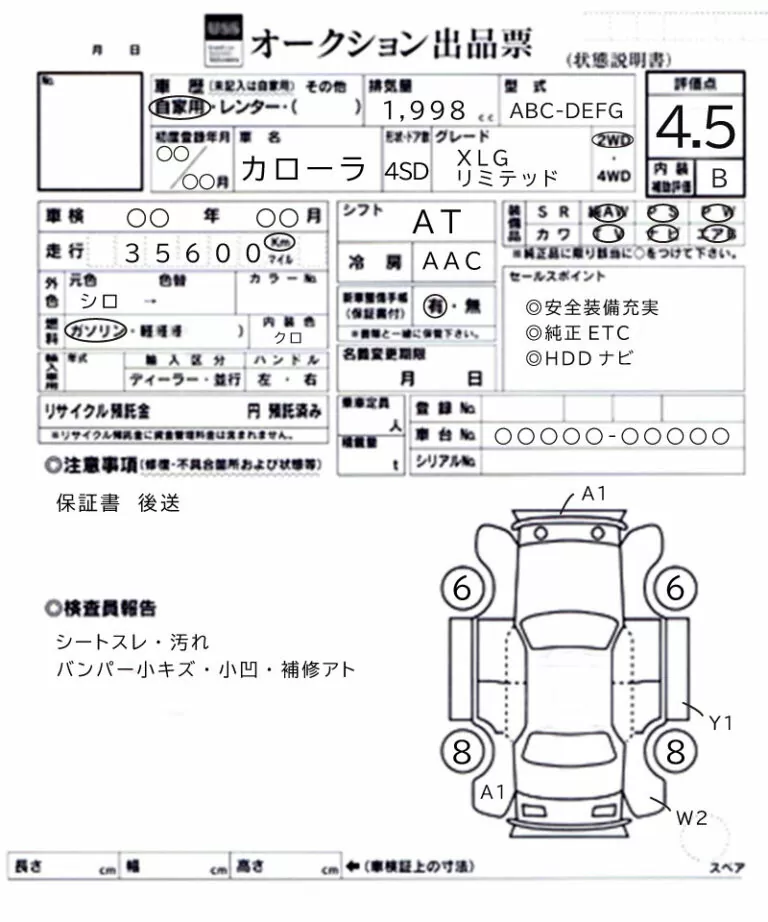
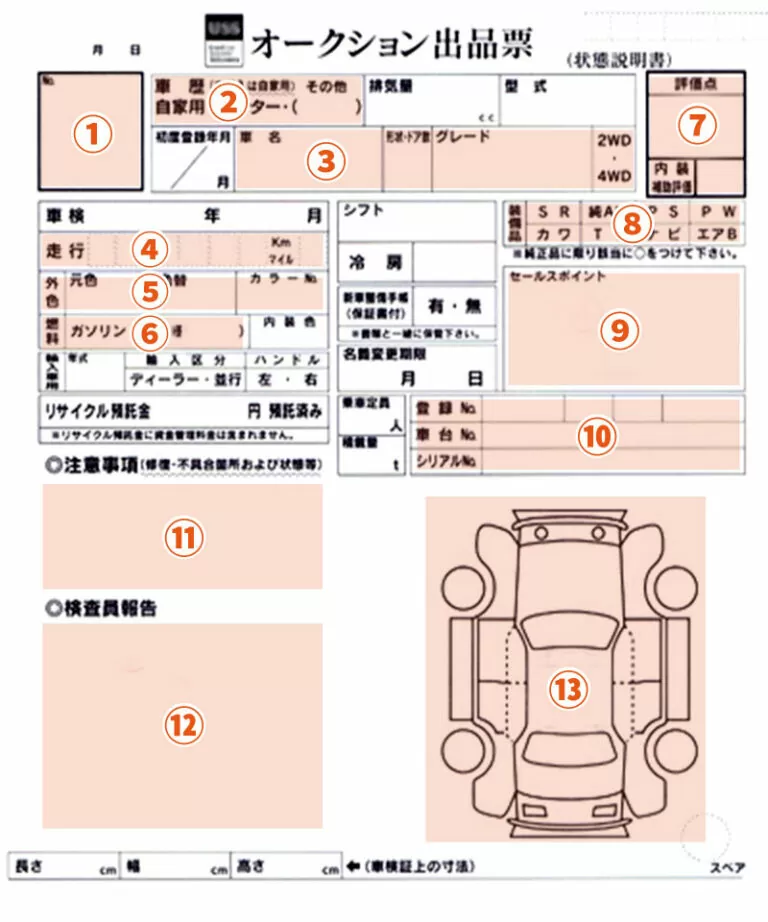
What's Included on the Auction Sheet
Each auction sheet includes a variety of vehicle data points, written in a standardized format that can vary slightly between auction houses. Here are the main sections:
1. Lot Number
This is the vehicle's unique number for that auction week. It's used to identify the car in communication with agents.
2. Vehicle History
Indicates prior use: private, rental, lease, etc. Rental cars may not qualify for warranties and often fetch lower prices.
3. Car Model and Grade
Different grades mean different features. Higher grades often have more equipment and may affect auction price.
4. Mileage
**Check for tampering indicators** like meter replacement or unclear mileage. Authentic mileage is critical. Vehicles with meter replacement or unclear mileage notes should **generally be avoided**, as this severely impacts resale value and trust.
5. Exterior Color
If the body color doesn’t match the code on the vehicle’s plate, the car has been repainted. These are **best avoided** because the repaint quality is uncertain and they typically fetch lower prices.
6. Fuel Type
Gasoline, Diesel, EV, Hybrid, etc.
7. Overall Grade
The primary indicator of condition. A score of **4.5 or higher** is generally considered good. **Be cautious of vehicles graded 4 or below**, as they often require substantial body work or repairs. (See detailed grading chart below.)
8. Equipment
- SR = Sunroof
- AW = Alloy Wheels
- PS = Power Steering
- PW = Power Windows
- Leather = Leather Seats
- TV = OEM TV
- Navi = OEM Navigation
- AirB = Airbags
9. Sales Points
Additional features like aftermarket parts or unique selling points.
10. Registration / Chassis Number
Used to verify vehicle identity, history, and for export documentation.
11. Remarks
Often mentions missing manuals, spare keys, or extra features.
12. Inspector Notes
Subjective notes on visible flaws, damage, or repairs needed.
13. Body Damage Diagram
A schematic of the car with damage markings. See next section for decoding these symbols.
Grading Criteria
Overall Vehicle Grades
| Grade | Mileage | Interior Grade | Exterior/Condition Description |
|---|---|---|---|
| S | 10,000 km | A | Nearly new; no repairs needed |
| 6 | 30,000 km | A | Excellent condition |
| 5 | 60,000 km | A | Very good with minor flaws |
| 4.5 | 100,000 km | B | Good, minor exterior repairs |
| 4 | 150,000 km | C | Noticeable wear or damage |
| 3.5 | 150,000 km | D | Multiple issues requiring work |
| 3 | Any | E | Major repairs required |
| 2 | Any | - | Poor condition |
| 1 | Any | - | Heavily modified, flood/fire |
| R | Any | - | Repaired accident vehicle |
| X | Any | - | Not rated (old/classic/etc.) |
Interior Grades
| Grade | Description |
|---|---|
| A | Minor or no damage, very clean |
| B | Small tears or burns, fixable dirt |
| C | Noticeable damage or stains |
| D | Major repairs or heavy wear |
| E | Interior in very poor condition or strong odor |
Body Condition Symbols
| Issue Type | Symbol | Description |
|---|---|---|
| Scratch | A1–A3 | Minor (A1) to large (A3) scratch |
| Dent | U1–U3 | Small to large dents |
| Ding | E | Pin-sized dents |
| Rust | S1–S3 | Light to severe rust |
| Corrosion | C1–C3 | Surface to deep corrosion |
| Crack | Y1–Y3 | Minor to major cracks |
| Repair | W1–W3 | Repaired, quality varies **(W1: light trace of repair; W3: obvious repair requiring re-work)** |
| Replaced | XX | Panel has been replaced |
Note: Numbers indicate severity. E.g., A1 = light scratch, A3 = large scratch.
Summary
Auction sheets are crucial when considering a vehicle purchase from Japan. While grading provides a reliable reference, they still include human judgment. If physical inspection is not possible, it is **crucial to thoroughly cross-check the provided photos and the auction sheet descriptions.** Additionally, keep in mind the **inspector's subjectivity and the possibility of minor flaws not fully detailed on the sheet.**
